
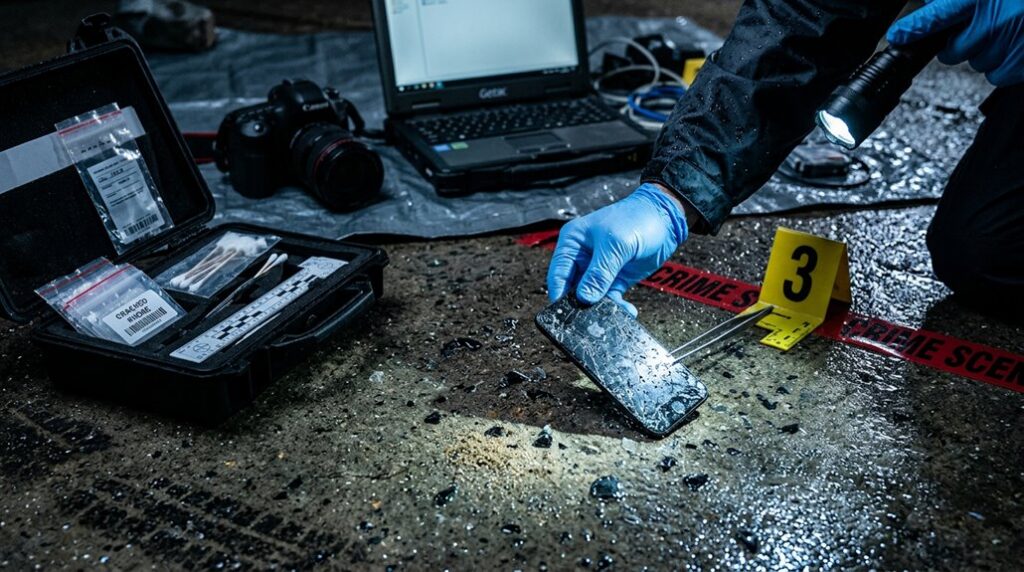
Every second after a breach, evidence vanishes — permanently. RAM evaporates the instant a system shuts down. Cloud audit logs on free-tier platforms survive fewer than 48 hours. Most organisations don’t realise how brutally narrow that window is until it’s already closed. Rapid response forensic teams operate against these unforgiving deadlines, and the first 60 minutes determine what a case is built on — or what it collapses without. The collection sequence these teams follow is precise, deliberate, and non-negotiable.
Why RAM, Logs, and Cloud Audit Trails Vanish Within Hours of a Breach
Digital evidence begins disappearing the moment a breach occurs. Three critical data sources face immediate loss: volatile memory, Windows Event Logs, and cloud audit trails.
Volatile memory capture must happen first. System RAM holds encryption keys, active malware code, and live network connections. Powering off means permanent loss.
Windows Event Logs retain data within a 7–30 day window using only 4MB capacity. Overwriting begins immediately after breach detection, eliminating records of attacker movement. Immediate backups of affected server log files must be executed as a priority to preserve this volatile data before the retention window closes.
Cloud trail retention creates additional urgency. AWS CloudTrail defaults to 90 days, while Azure AD sign-in logs expire in just 7–30 days depending on licensing tier.
These windows close fast. Forensic teams must act before evidence permanently disappears. Attacker clean-up routines often execute on delayed timers, actively destroying remaining artefacts within this same critical window.
The 60-Minute Collection Window That Determines What Digital Forensics Evidence Survives
Most ransomware campaigns delete VSS shadow copies within 30 minutes of encryption beginning. This reality defines why rapid response forensics teams operate on strict collection timelines. The 60-minute window determines what digital evidence preservation remains possible.
Most ransomware deletes shadow copies within 30 minutes. That single fact dictates everything about forensic response timelines.
Itsamaya Holdings structures collection using a precise sequence:
- T+0 to T+5: Running processes and active network connections captured first, requiring under 3 minutes
- T+5 to T+20: Windows event logs exported before Security log overwrite occurs
- T+20 to T+35: Shadow copy documentation and persistence registry keys collected
Network isolation happens only after collection completes. Premature isolation destroys the evidence it intends to protect. Teams executing this sequence achieve a great result: a defensible, complete digital record that supports accurate investigation and subsequent legal action. All acquisition procedures adhere to the Electronic Communications and Transactions Act and employ write-blocking hardware to ensure evidence integrity is preserved throughout the process. Memory forensics has identified the initial access vector in 90% of ransomware cases where acquisition occurred before the system was rebooted.
How to Capture Volatile Memory and Running Processes Before the Trail Goes Cold
The 60-minute collection window determines which evidence survives, but the first five minutes of that window carry disproportionate weight. RAM holds decrypted files, cleartext credentials, and active attacker shells that exist nowhere on disk. Power loss destroys this data permanently.
MemoryAcquisitionPriority drives every decision in these opening minutes. Specialists use tools like DumpIt or WinPmem on Windows systems, or LiME kernel modules on Linux, before any network isolation occurs. This sequence is non-negotiable.
RunningProcessCapture follows immediately after memory acquisition completes. Technicians document every active process, full command lines, loaded modules, and parent–child relationships. These details reconstruct exactly how an attacker moved through the environment. Rigorous documentation of this process data supports chain of custody requirements, ensuring findings remain admissible and withstand intense legal scrutiny in South African courts.
Network connections, ARP cache, and DNS resolver state are collected next. All of this disappears on reboot. Active TLS session keys residing in memory at the time of collection can enable retrospective decryption of previously recorded network traffic, making their capture before any system state change essential.
How Digital Forensics Teams Lock Down Live Systems and Freeze the Evidence Chain
Once volatile memory capture is complete, forensic specialists shift focus to locking down the live system and freezing the evidential chain. Teams apply incident scene isolation at the network layer, cutting internet access and lateral movement paths without powering down systems. This preserves the order of volatility, protecting remaining evidence from destruction.
Key actions during this phase include:
- Network isolation at the layer level, blocking command-and-control communication while RAM contents remain intact
- Write-blocker implementation on all storage media, preventing any read/write modifications to original drives
- Hash verification of forensic copies, providing cryptographic proof that acquisition methods remained sound
Contemporaneous documentation records every action with exact timestamps. Legal teams receive immediate notification when data exfiltration remains active. When litigation is anticipated, a legal hold must be issued immediately to suspend data destruction and log rotation policies before routine deletion destroys relevant evidence. Across enterprise environments, this extends to email servers, cloud platforms, and mobile devices, where strict chain of custody must be maintained throughout the extraction and processing of all electronically stored information.
What Irreversible Evidence Loss Means for Attribution, Prosecution, and Incident Scope
When forensic teams fail to capture evidence before containment actions begin, the consequences extend far beyond a single missed file. Attribution becomes impossible. Attacker identification depends on network logs, memory contents, and process artefacts that exist only in volatile state.
Cyber threat containment actions performed without prior evidence capture destroy active command-and-control records permanently. Courts require authenticity, reliability, and integrity across all collected artefacts. Missing any single requirement defeats admissibility and ends prosecution viability.
Anti-forensic wiping prevention matters equally for grasping full incident scope. Undetected secondary implants remain active when process execution data disappears. Network flow record destruction eliminates visibility into exfiltration routes entirely. Endpoint hardening recommendations aligned with enterprise standards reduce the attack surface that secondary implants exploit across compromised device environments.
Three irreversible losses define failed response:
- Attacker identity
- Legal admissibility
- Complete compromise scope
Each loss compounds the others.
Cloud environments introduce an additional dimension of urgency, as Entra ID free tier sign-in logs are retained for only seven days before automated deletion permanently removes them from the environment.



